About Rear Window
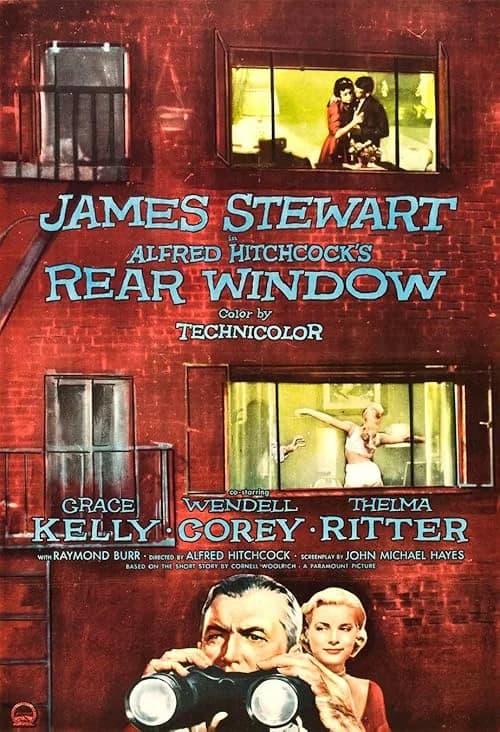
Alfred Hitchcock's 1954 classic Rear Window remains one of cinema's most brilliant suspense thrillers. The film follows L.B. 'Jeff' Jefferies (James Stewart), a photographer confined to his Greenwich Village apartment with a broken leg. Out of boredom, he begins observing his neighbors through his rear window, turning their lives into a personal spectacle. His sophisticated girlfriend Lisa Fremont (Grace Kelly) and nurse Stella (Thelma Ritter) initially humor his voyeurism, but the mood shifts dramatically when Jeff becomes convinced that Lars Thorwald (Raymond Burr), a salesman across the courtyard, has murdered his bedridden wife.
What makes Rear Window so compelling is its masterful construction. Hitchcock confines the entire narrative—and the audience's perspective—almost entirely to Jeff's apartment, creating an unparalleled sense of claustrophobia and shared complicity. We see only what Jeff sees and hear only what he hears, making us active participants in his growing obsession. James Stewart delivers a nuanced performance, balancing charm with a disturbing descent into paranoia, while Grace Kelly is luminous as the glamorous Lisa, whose practical intelligence becomes crucial to the investigation.
The film is a masterclass in tension, using mundane apartment-block activities to build unbearable suspense. Hitchcock explores themes of voyeurism, morality, and urban alienation without ever sacrificing entertainment. The meticulous set design of the courtyard is a character in itself, with each window telling a miniature story. Viewers should watch Rear Window not just as a perfect mystery, but as a profound commentary on observation and human connection. Its influence on thriller filmmaking is immeasurable, and its tightly wound plot continues to captivate audiences nearly seventy years later. This is essential viewing for anyone who appreciates cinematic craft and timeless storytelling.
What makes Rear Window so compelling is its masterful construction. Hitchcock confines the entire narrative—and the audience's perspective—almost entirely to Jeff's apartment, creating an unparalleled sense of claustrophobia and shared complicity. We see only what Jeff sees and hear only what he hears, making us active participants in his growing obsession. James Stewart delivers a nuanced performance, balancing charm with a disturbing descent into paranoia, while Grace Kelly is luminous as the glamorous Lisa, whose practical intelligence becomes crucial to the investigation.
The film is a masterclass in tension, using mundane apartment-block activities to build unbearable suspense. Hitchcock explores themes of voyeurism, morality, and urban alienation without ever sacrificing entertainment. The meticulous set design of the courtyard is a character in itself, with each window telling a miniature story. Viewers should watch Rear Window not just as a perfect mystery, but as a profound commentary on observation and human connection. Its influence on thriller filmmaking is immeasurable, and its tightly wound plot continues to captivate audiences nearly seventy years later. This is essential viewing for anyone who appreciates cinematic craft and timeless storytelling.